Hail Hit Decatur Again. What Should You Actually Do Before Calling Insurance?
Discover the key actions to take after hail hits Decatur. Learn how to inspect for damage, document evidence, and seek reliable inspections before contacting insurance.
If you've lived in Decatur for more than a season or two, you already know how fast our weather can change.
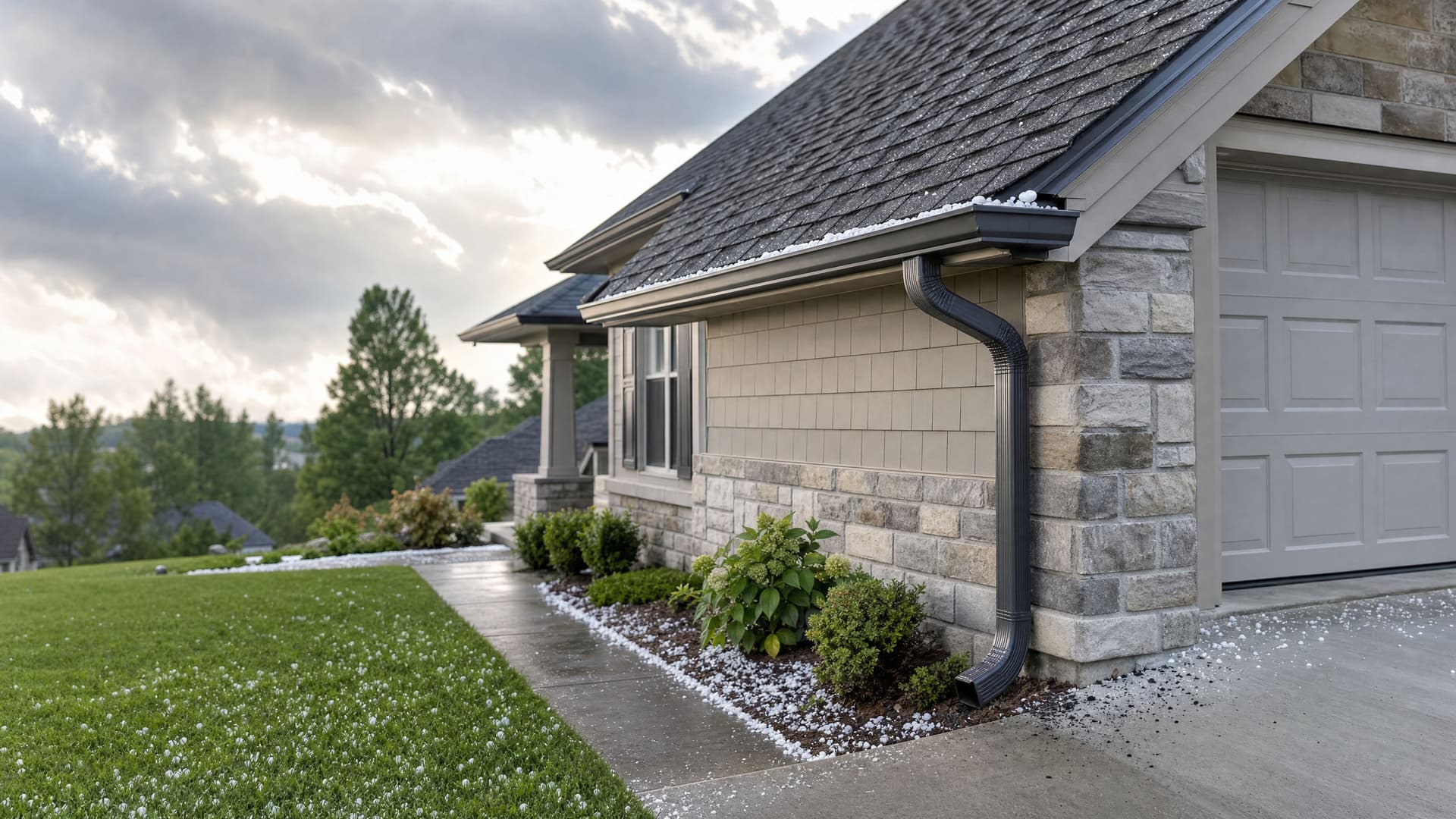
One minute it's sunny. The next, you're watching hail bounce off the driveway.
After the storm passes, most homeowners walk outside, look up at the roof, and think the same thing:
"I can't really tell if anything is wrong up there."
That is completely normal.
Most hail damage is hard to see from the ground, even when it is serious. What you do in the first few days after a storm matters more than most people realize. Not just for your roof, but for your insurance claim, your wallet, and your peace of mind.
This guide walks you through it the way we would walk a neighbor through it.
No pressure. No scare tactics. Just honest information.
Why Hail Damage in Decatur Is Sneakier Than You Think
Decatur sits in a part of Georgia that sees frequent severe thunderstorm watches, especially in spring and early summer.
Most of our storms do not make national news, but they do not have to in order to damage your roof.
Even pea-sized to quarter-sized hail, especially when paired with strong wind, can:
Knock the protective granules off asphalt shingles
Bruise the shingle underneath, so it looks fine from the outside but is weakened underneath
Loosen flashing around chimneys and vents
Dent gutters, downspouts, and roof vents
The tricky part is that this kind of damage does not usually leak right away.
A bruised shingle might keep water out for months, or even a year or two, before it finally cracks and lets moisture into your attic. By then, the storm that caused it is long gone, and so is your easiest window to file a claim.
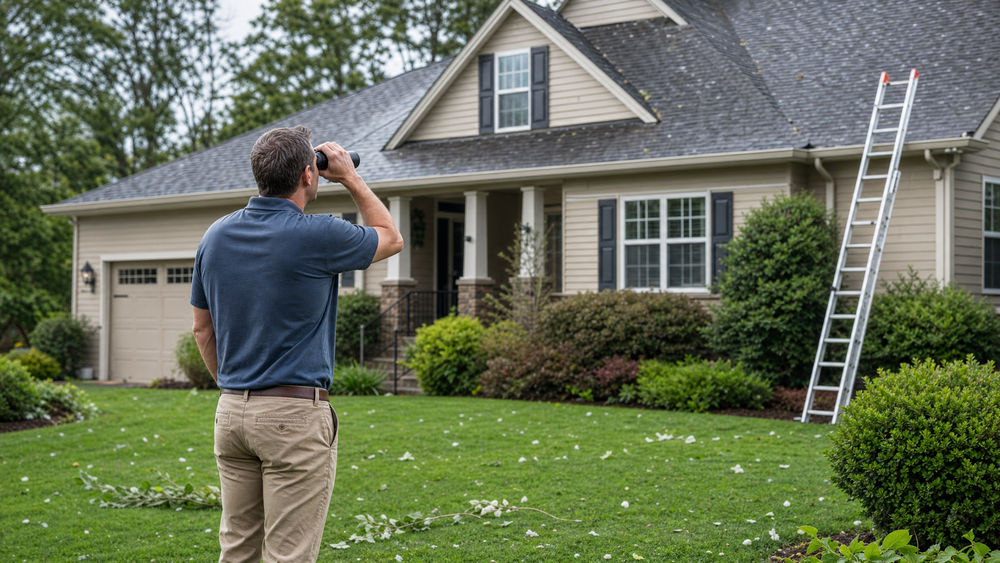
Step 1: Do Not Climb Up There
We say this first because it is the most ignored piece of advice.
Walking on a roof you think is damaged is one of the fastest ways to get hurt or make the damage worse.
Use binoculars. Walk around the yard. Look at the ground.
Here is what to check from a safe spot:
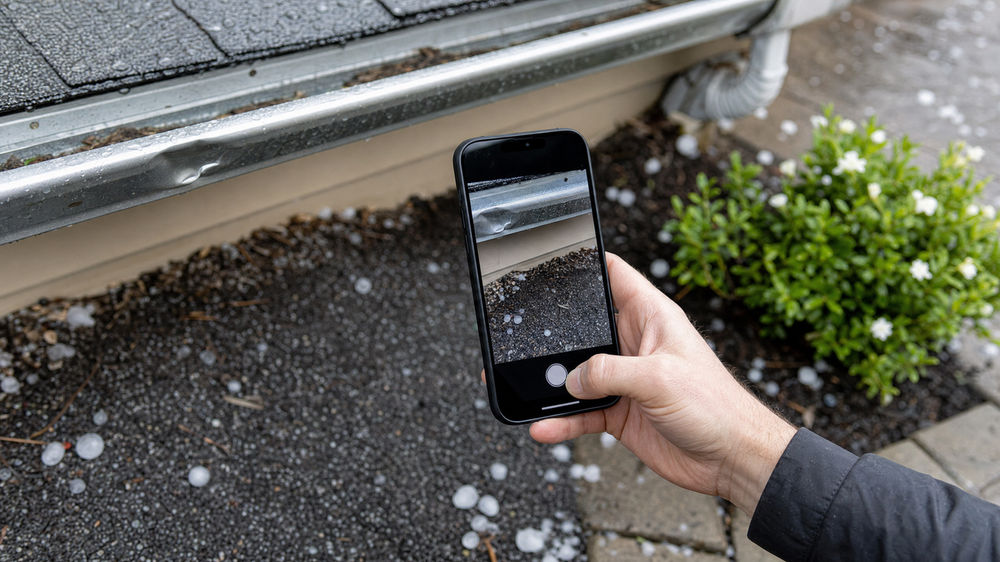
Gutters and downspouts: Dents, dings, or scratches that were not there before
The ground around your house: Black or gray granules washed out of the downspouts. They usually look like coarse sand
AC unit and outdoor furniture: Dents on the metal fins or fresh splatter marks
Window screens, siding, mailbox: Any new impact marks
Inside the attic: Daylight where there should not be any, water stains on the wood, or a musty smell
If any of those signs show up, it is worth getting a real inspection.
If none of them do, your roof still might have damage. It just means you cannot confirm it from the ground.
Step 2: Take Photos Before You Do Anything Else
Even if you are not sure yet, document everything.
Take date-stamped photos of your gutters, yard debris, and any visible damage. These can be incredibly helpful if you do end up filing a claim later.
Insurance adjusters look for proof of when damage happened. The more you can show, the smoother the process usually goes.
Step 3: Get an Independent Inspection First, Not From the First Person Who Knocks
This is where a lot of Decatur homeowners get into trouble.
After a storm, out-of-town roofing crews tend to show up fast. They knock on doors, hand out flyers, and tell people they "noticed damage from the street."
Some are legitimate. Many are not.
A few honest rules of thumb:
A trustworthy local roofer will not pressure you to sign anything on the spot.
Nobody can spot real hail damage on your roof from the street. That is a sales line.
Never sign a contract or "authorization form" just to get a free inspection. Some of those forms can lock you into using that company.
Be cautious of anyone offering to "waive" or "cover" your deductible. In Georgia, that is not just shady. It can be illegal.
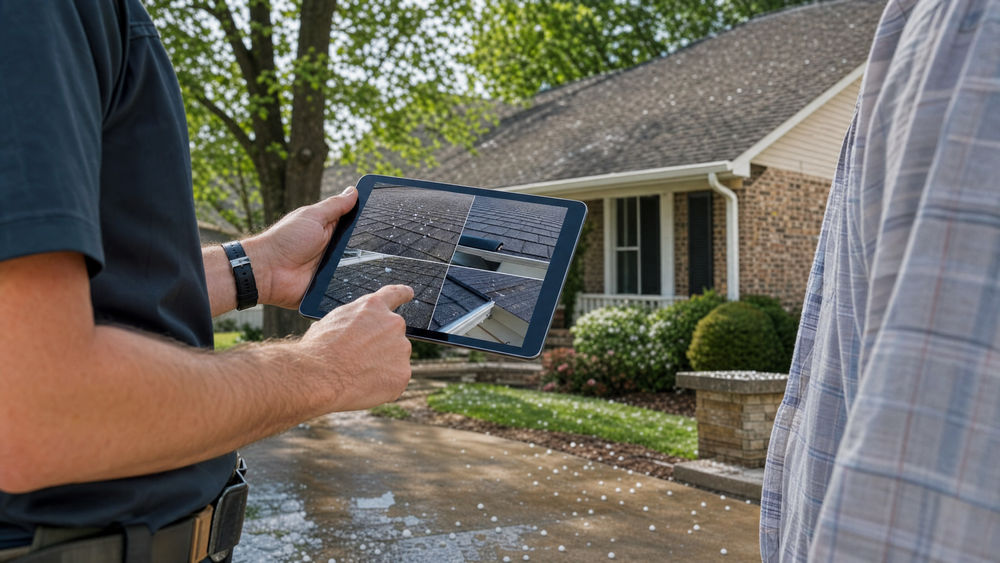
A real local inspection should give you photos, a clear written summary of what the inspector saw, and zero pressure to make a decision that day.
That is it.
Step 4: Decide Whether to File a Claim Carefully
This is the part homeowners worry about most.
The fear is real:"If I file a claim, will my premiums go up?" "Will I get dropped?" "Is this even worth it?"
The honest answer is that it depends.
A few things to know:
Weather damage, like hail, wind, or falling trees, is not usually treated the same as an at-fault claim. It is out of your control, and insurance companies know that.
One claim is very different from multiple claims in a short period of time.
If the repair cost is close to your deductible, filing may not be worth it.
If you have widespread damage, paying out of pocket usually does not make sense. That is what the policy is for.
Before you file, ask your inspector to walk you through what they found and give you a rough idea of what the repairs would cost.
A reputable roofer will give you that estimate, even if the damage is small enough that insurance does not need to be involved.
We do this all the time for Decatur homeowners, and sometimes we tell people, "Honestly, just hold off. You do not have a claim worth filing right now."
Step 5: Know Your Policy's Time Limits
Most Georgia homeowner policies give you one to two years to file a hail damage claim, but sooner is always better.
The longer you wait, the harder it becomes to prove the damage came from a specific storm and not from general wear.
If you suspect damage, get the inspection done within a few weeks of the storm.
A Quick Note on Older Roofs
If your roof is 15 years old or more, the way your insurance handles a claim may be different.
Many policies switch from "replacement cost value" to "actual cash value" after a certain age. That means they may pay less because they factor in depreciation.
This is not a reason to panic. It is a reason to know what your policy says before a storm hits, not after.
The Soft Truth
Most Decatur homes do not need a new roof after every storm.
A lot of them just need a careful set of eyes and an honest conversation.
The worst outcomes we see usually come from one of two things:
Ignoring damage for too long
Trusting the wrong person too quickly
If you want a second opinion after a storm, or you are just not sure where to start, Roofit Restoration offers free, no-pressure inspections to homeowners across Decatur and the surrounding area.
We will tell you exactly what we see, show you the photos, and let you decide what to do next.
No door knocking. No "sign here today." Just a straight answer.
Frequently Asked Questions
Q: How can I tell if I have hail damage if I cannot see anything from the ground? You often cannot, and that is normal. Subtle hail damage like granule loss and shingle bruising is hard to spot without getting close. The best clues from the ground are dented gutters, granules washed into flower beds, and fresh dings on your AC unit or siding.
Q: Will filing a hail damage claim raise my insurance rates? Possibly, but weather-related claims are usually treated more leniently than at-fault claims. A single claim for storm damage typically has a smaller impact than multiple claims. You can also call your insurer to ask hypothetically before filing. That conversation alone should not affect your rate.
Q: A roofer knocked on my door after the storm. Should I let them inspect my roof? We would recommend not letting anyone you did not personally call get on your roof. Door-knocking after storms is a common storm-chaser tactic. If you want an inspection, choose a local company yourself.
Q: How long after a storm do I have to file a claim in Georgia? Most policies allow one to two years, but check yours. The sooner you act, the easier it is to prove the damage came from that specific storm.
Q: Do I need to file a claim, or can I just pay out of pocket? If the repair is small and close to your deductible, paying out of pocket may make more sense. A reputable inspector will help you weigh that honestly.
Q: Does Roofit Restoration help with the insurance claim process? Yes. We document damage, meet with adjusters on-site when needed, and help homeowners understand what their policy covers. But we will not pressure anyone to file a claim that is not worth filing.